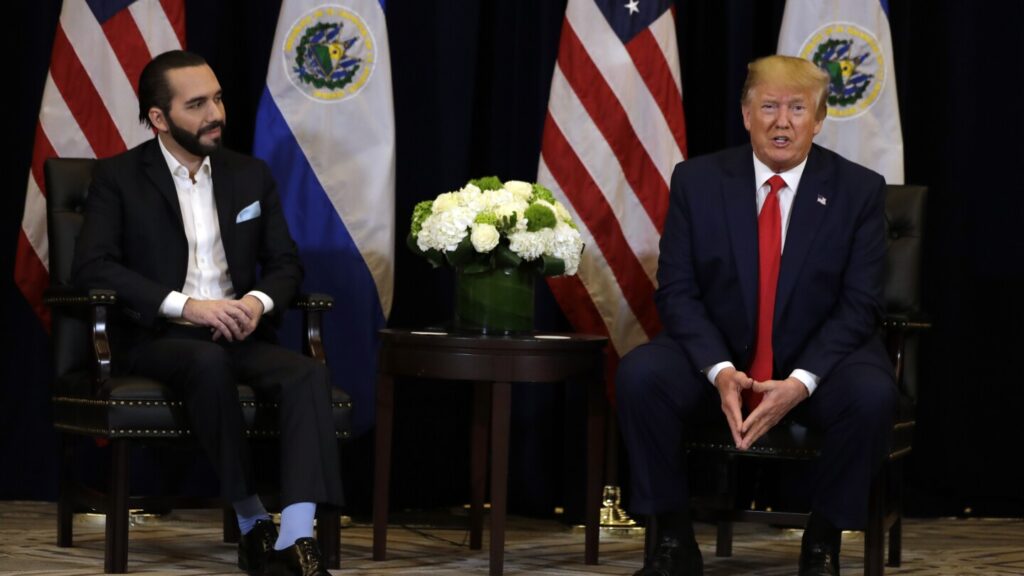
President Donald Trump is set to meet with El Salvador’s President Nayib Bukele at the White House, highlighting El Salvador’s role in the U.S. deportation operations. El Salvador has accepted over 200 Venezuelan immigrants from the U.S., accused of gang activity and violent crimes, and housed them in a maximum-security prison near San Salvador. Bukele’s popularity in El Salvador, attributed to his crackdown on street gangs, has made him a key ally for the Trump administration. Despite limited evidence of the immigrants’ gang affiliations, Bukele has cooperated with the U.S. in detaining them.
The U.S. struck a deal with El Salvador to pay $6 million to imprison the Venezuelan immigrants for a year, bypassing legal challenges. The Supreme Court recently cleared the way for the use of the Alien Enemies Act to deport these individuals, emphasizing the need for court hearings before removal. Bukele’s support for the U.S. in deportations, including dangerous criminals, has solidified his relationship with the Trump administration.
Meanwhile, the Supreme Court has called for the return of a Maryland resident, Kilmar Abrego Garcia, who was wrongly deported. Trump indicated willingness to facilitate Abrego Garcia’s return if instructed by the Court. Bukele’s tough stance on gangs, including the construction of a massive prison, has garnered popular support but also raised concerns about suspended rights under the state of emergency.
As Bukele’s visit to Washington unfolds, observers emphasize the need for concrete actions benefiting Salvadorans. The leaders’ similar approaches to media and opposition suggest a shared populism, though recent shifts in U.S.-El Salvador relations under the Biden administration may complicate their dynamic. The State Department’s updated travel advisory for El Salvador to Level 1 reflects improved safety conditions, with a decline in gang-related violence over the past three years.