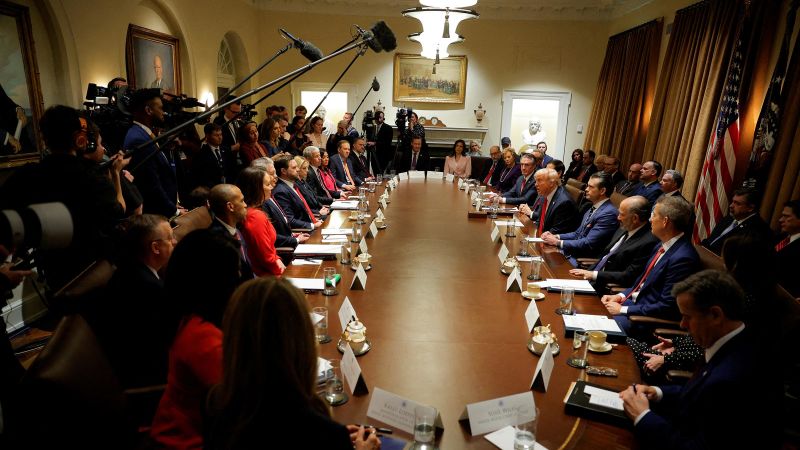
President Donald Trump has been heavily criticized for his administration’s actions that seem to benefit his wealthy Cabinet members and their industries. The administration has dismantled traditional government oversight mechanisms, enabling conflicts of interest and blurring the lines between public service and personal gain. Trump’s Cabinet includes some of the richest individuals ever in federal government roles, with several holding assets worth millions or even billions of dollars.
The administration’s policies align closely with the financial interests of these top advisers, raising concerns about ethical conflicts. Trump’s promotion of industries such as energy and banking, as well as his embrace of cryptocurrencies, has drawn scrutiny for potentially favoring his own business interests. The administration’s decisions, such as slashing regulations and reshaping oversight bodies, have sparked controversy and accusations of a lack of ethical standards.
Furthermore, Trump’s moves to boost the crypto industry, particularly through a strategic Bitcoin reserve, have faced criticism for potentially enriching existing holders of the asset, including those who supported his reelection. The administration’s actions, including reshaping internet infrastructure programs to benefit satellite companies like Elon Musk’s SpaceX, have raised questions about conflicts of interest and the prioritization of personal gain over public service.
Critics argue that the administration’s close ties to industry insiders pose a threat to government transparency and accountability, with some likening the disregard for ethics to pre-Watergate eras. The administration’s reshaping of key programs and policies to benefit specific industries has sparked concerns about the impartiality of decision-making and the influence of personal interests on public policy.