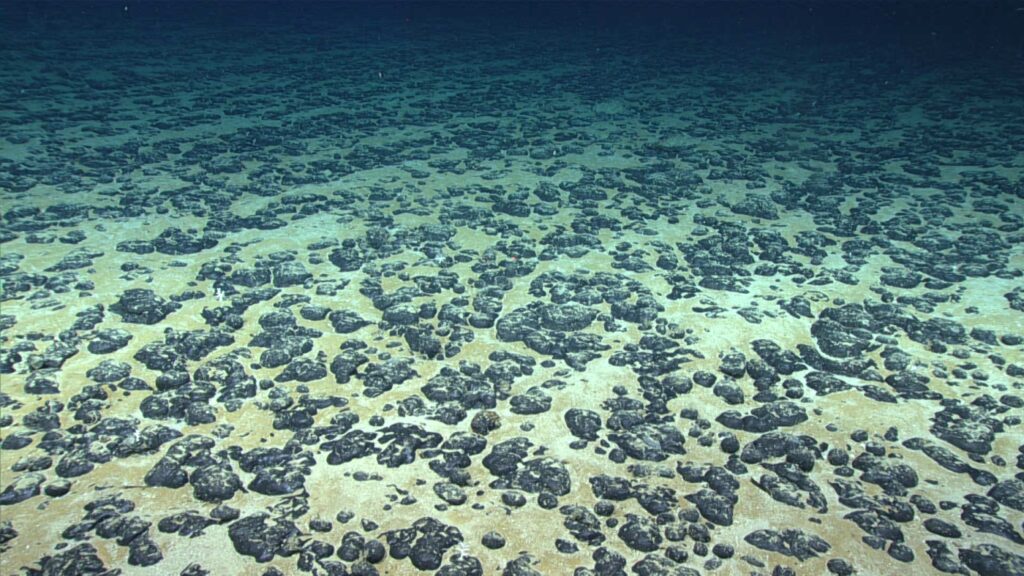
President Trump signed an executive order to facilitate deep-sea mining, aiming to boost the domestic supply of critical minerals. While commercial-scale deep-sea mining is not currently operational worldwide, companies are drawn to the ocean floor for metals like nickel, cobalt, manganese, and copper essential for technologies such as electric vehicle batteries. These metals are typically found in potato-sized nodules on the Pacific Ocean floor, beyond national jurisdictions.
The executive order bypasses international negotiations led by the International Seabed Authority (ISA) to regulate deep-sea mining, as the U.S. is not a member. Trump’s order speeds up permit processes for mining in U.S. and international waters under the 1980 Deep Seabed Hard Mineral Resources Act.
Critics, including scientists and environmental groups, warn that deep-sea mining could harm marine ecosystems and fisheries. Douglas McCauley, an ocean science professor, cautions about potential catastrophic consequences on fragile ecosystems. Concerns also arise over the necessity of seabed mining for mineral supply, with advancements in alternative battery technologies reducing the demand for minerals like cobalt and nickel.
The Metals Company, a Canadian mining firm, is eyeing a permit for seabed mining in U.S. waters. The order’s implications on marine ecosystems and the evolving landscape of mineral demand raise significant environmental and technological considerations amidst the push for deep-sea mining.