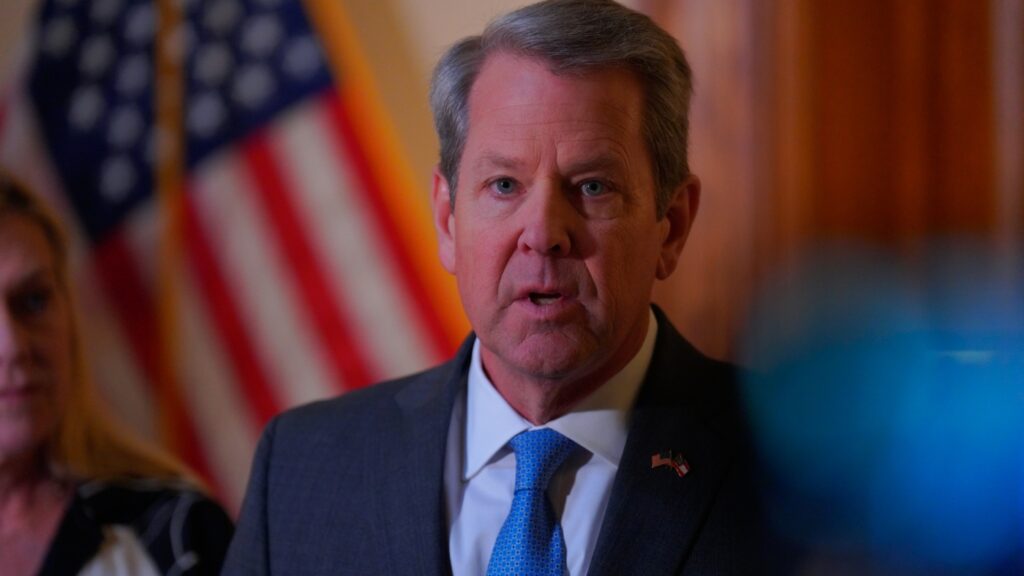
In a strategic political move that reverberated through Georgia’s political landscape, Governor Brian Kemp announced he would not run for the U.S. Senate in 2026. This decision came after intense speculation and discussions with key Republican figures, including Senate Majority Leader John Thune and National Republican Senatorial Committee Chair, Tim Scott. Kemp’s choice not only reshapes the upcoming Senate race in Georgia but also sets the stage for a contentious and costly primary battle among Republican candidates.
Kemp’s political journey, marked by his clash with former President Donald Trump over the 2020 election results, reflects a unique position in the Republican party. Despite Trump’s initial opposition, Kemp secured a decisive victory in the primary and went on to defeat Stacey Abrams in the gubernatorial race. The fallout and subsequent reconciliation between Kemp and Trump underscore the complex dynamics within the GOP leading up to the 2026 Senate race.
With Kemp out of the Senate race, Democrats, led by incumbent Senator Jon Ossoff, are preparing for a challenging electoral landscape. Ossoff’s strong start to his reelection bid and Kemp’s absence as a formidable opponent have energized Democratic strategists. The potential entry of controversial figures like Rep. Marjorie Taylor Greene adds another layer of uncertainty to the unfolding political drama in Georgia.
As the Republican field in Georgia readjusts post-Kemp’s announcement, the stage is set for a high-stakes battle that will shape the future of the Senate in 2026. Kemp’s decision not only impacts Georgia’s political landscape but also reflects broader trends in the GOP as the party navigates internal rifts and prepares for a pivotal election year.