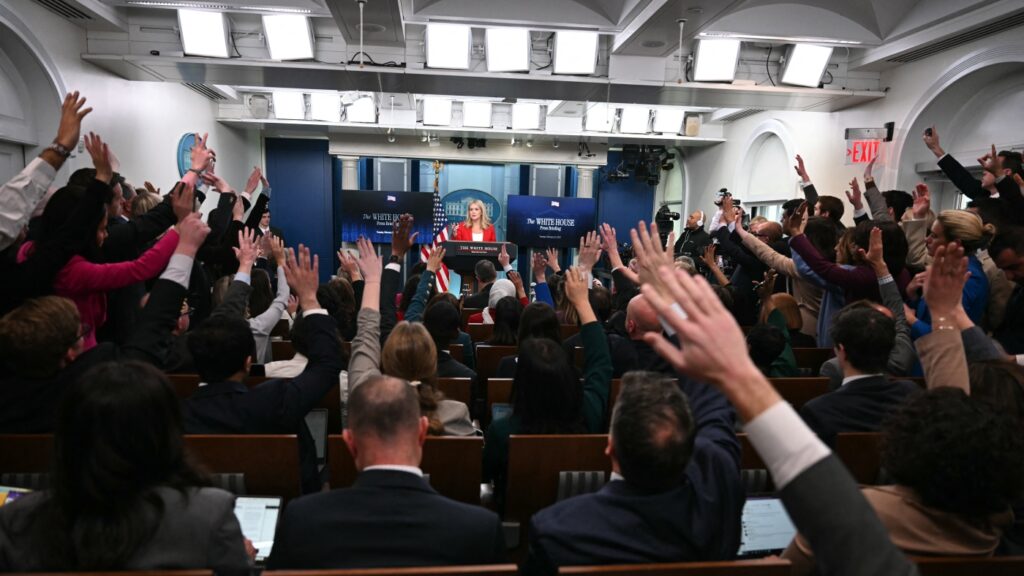
The Trump administration has implemented new measures to control the news coverage it receives, shifting the power from the White House Correspondents’ Association to the White House itself. Press Secretary Karoline Leavitt announced that the White House would now decide which reporters cover major events, emphasizing a return of “power to the people.” This move impacts the press pool system, where various news organizations work together to report on events. The administration has also excluded The Associated Press from major events due to disagreements over terminology, leading to a legal battle over press access.
Furthermore, the administration’s actions are likened to a tightening grip on the press, reminiscent of tactics seen in authoritarian regimes. There are concerns about the inclusion of fringe media figures in press briefings and the dismissal of mainstream media outlets from press pools. Additionally, Trump’s influence extends to the Voice of America, where new leadership appointments raise questions about the network’s independence and mission.
Critics view these developments as part of a broader strategy to control the narrative, suppress dissent, and promote favorable coverage of the administration. The administration’s efforts to influence media coverage align with its broader agenda to consolidate power and limit critical oversight within the government. These actions have sparked debates about press freedom, the role of the media in democracy, and the boundaries of government influence over journalistic independence.