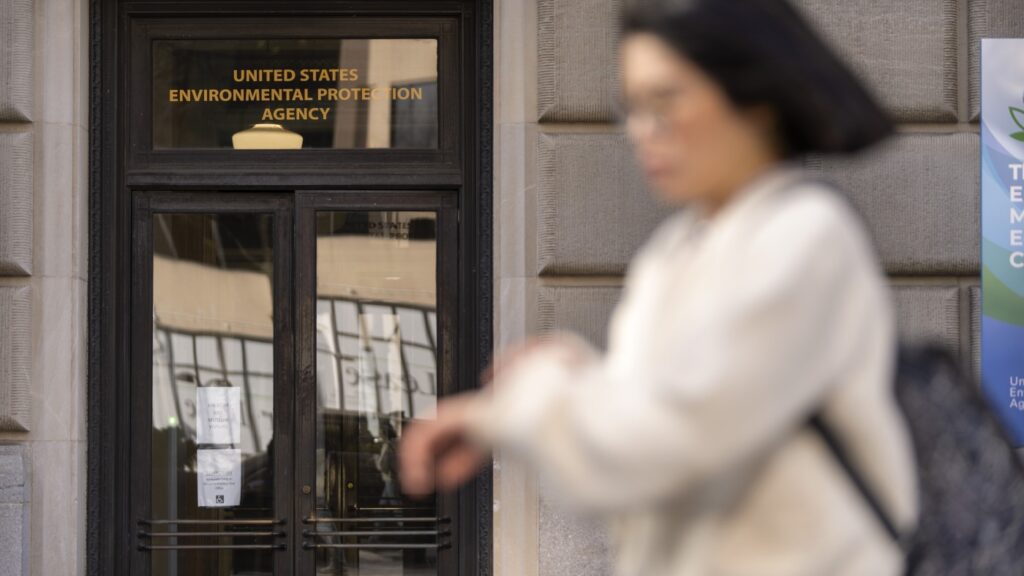
The Trump administration recently announced significant reorganization plans for the Environmental Protection Agency (EPA), signaling major staffing cuts, particularly in the scientific research arm. EPA Administrator Lee Zeldin aims to reduce staff levels to those seen in the 1980s to enhance operational efficiency. This could result in potentially thousands fewer employees, as the agency currently employs around 15,000 people.
One of the key areas impacted by the reorganization is the Office of Research and Development (ORD), which conducts crucial scientific analysis on environmental risks such as air pollution and chemicals. The EPA intends to redistribute some scientific staff from ORD to existing policy-making offices and establish new offices. Former EPA official Jennifer Orme-Zavaleta expressed concerns that this restructuring could jeopardize the EPA’s research capabilities and its ability to safeguard public health.
Moreover, there are apprehensions that budget cuts could significantly impact research efforts. Zeldin previously announced intentions to slash the EPA’s budget by 65%, with the proposed budget for ORD facing a 45% reduction. Experts warn that such substantial cuts could severely hamper the EPA’s research enterprise. Zeldin defended these changes as necessary for improving the agency’s efficiency, with estimated savings of $300 million by 2026 compared to the agency’s 2024 budget of over $9 billion.
Staff within the EPA are apprehensive about the reorganization, with concerns raised about the reduction in employment opportunities. The EPA’s recent actions align with a broader trend of scientific program cuts across the federal government under the Trump administration, impacting agencies like NOAA, NIH, and NSF.