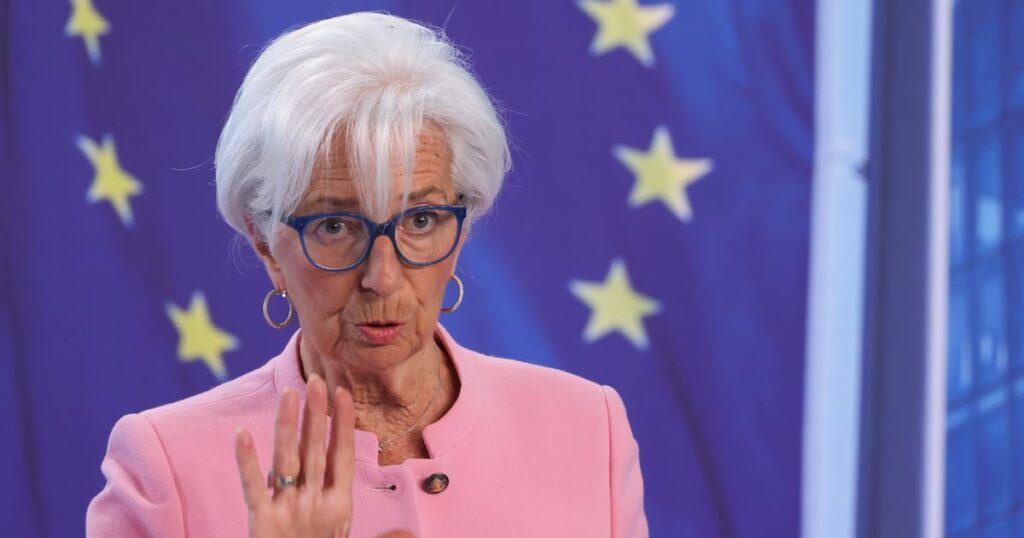
The European Central Bank (ECB) took a decisive step by reducing borrowing costs by a quarter point amid escalating market turmoil triggered by US tariffs. This marks the seventh rate cut since last June, bringing the benchmark deposit rate down to 2.5% from 4%. The shift in focus from inflation to economic concerns is evident as inflation slowed to 2.2% in March. The rate cut offers some relief to mortgage holders in the face of global economic uncertainty.
While US President Donald Trump has paused some tariffs, many remain in effect, contributing to financial market volatility and complicating the interest rate trajectory. Investors are eagerly awaiting ECB chief Christine Lagarde’s commentary post-decision for insights into future actions. Lagarde is expected to maintain a cautious stance, refraining from committing to a specific direction for borrowing costs given the uncertain economic landscape.
Market analysts will closely scrutinize if the ECB acknowledges rates as restrictive, indicating a potential for further policy easing. Additionally, there is anticipation for an update on the repercussions of trade barriers. The ECB’s nuanced approach in balancing economic stability amidst global challenges underscores the importance of monitoring future developments in the financial landscape.